Showing posts with label theater. Show all posts

Monday, December 2, 2013

On toil and soil: Pitong Sundang


There is something frightening about the way that we, as people, hold a piece of paper at high value. The thought of presenting a signature to prove ownership creates a black hole in our living. We can claim property to the land on which we were born; yet, we were raised to acknowledge ink on paper as power. The central idea posed in this chapter of our lives as a Filipino society, then, is the fact that power can absolutely change everything.

Pitong Sundang: mga Sayaw sa Lupa at Pakikibaka is an accurate depiction of the present situation of trade on Philippine soil. We have the farmer who contentedly toils his land in an effort to make ends meet in a competitive global market while looking towards better prospects for the family to which he returns. He wakes up to the sight of intruders determined to grab hold of his property and everything for which he has worked. And, they are bound to get it simply because they can. They patronize the farmer, feeding him a load of bull, until the farmer toils for them – people who barely know the labor. He soaks, chafes, and enslaves himself only to get nothing in return, to be cheated time and again. He is left with a land barren that there is barely anything left. His entire life – destroyed by snails, disfigured by locusts, and spoiled by rats – crushed by entities that are deemed untouchable because the piece of paper in their possession has created a force field around. Fight and be eaten; keep silent and get beaten anyway.

Whether we choose to look at it in that particular manner or dismiss it as another form, these illnesses have been present in our society for generations, almost like a mandatory heritage that deserved to be innate. Farmers and their family – little children – killed without any trace of reluctance; gunned down for demanding land reforms, protesting harsh labor conditions and unfair trade policies. They become a people tied at the waist, restrained by the very ones who were sworn to protect them at all costs. In our history, we have the Hacienda Luisita massacre to begin with. Who’s to say that the painfully slow bureaucracy is not here for a culmination of wealth? That the foreign countries do not seek imperialism? That the businessmen are not driven to climb a notch higher in the social hierarchy? And, if that is all so, then where are we as a people? What weapon does the meek and the poor have against the powerful?

This performance was an enchanting representation of all these issues; a wake-up call for the meek to rise as one, to reclaim the land that is truly ours. A thought that settled into me was the idea that the land, as well as the crops on which it breathes life, might as well be us, the Filipinos. It is always there to be stepped on, to dig, to read the headlines when the wind blows the hapless news, to be soaked with the blood that was shed from the hands of labor. The pests trample on it, yet it remains silent. We are caged animals: our captors anticipate our errors. Then they leap at us and rip us to tiny little shreds. And out of fear and false pretenses, we allow them because we have nothing with which to fight.

We are being called to fight: to go against the odds like the mighty heroes before us; those in the likes Andres Bonifacio, who fought his all to get this land on which we stand. Enough of the bureaucracy, the militia, foreign rulers, and negotiators. We could not let them take advantage of us anymore, or strike us, or thrust their hips unto ours. Enough submission and degradation. There is no doubt in my mind that we can always find ways to rise above errant dominion. If the answers lie on revolts, then so be it. For the price of unity and for the reclamation of what is truly ours, then so be it. It is okay to be obedient or to be good. But it is a different and a far nobler thing to do what is right. Only in this manner will we be able to contentedly plow our land again.

Friday, August 16, 2013

A New Brain by Ateneo Blue Repertory


A powerful sentiment that truly strikes a chord whenever I think about it now is how Director Toff De Venecia articulates on the story of A New Brain as not one for happy endings but for new beginnings. A lot of us in the universe fancy life and its challenges as a narrow rope on which we need to walk in order to get to the other, more beautiful side of things, in which walking across is a one-shot deal, and any opportunities of doing it all over again is shut down.

In taking the challenge, we ask: who will we be when we wake up? What will change? Will we become better people? Will everything be okay? What will happen to precious memory – the ones that we cannot let go but instead display in a glass case – will they ever really matter after all this? The rope then becomes a hindrance from which we must escape rather than an advantage to which we can refer in preparation for the next test. We fail to consider that it is the resiliency to face another challenge after the conclusion of one that weighs heavier than actually reaching the better side of the rope. This we see in A New Brain, a musical comedy that plies on irony, wit, power, commotion, memory, and letting go.

I’d like to believe that, at some point, there is a Gordon Schwinn lurking inside each of us. He is the poor frustrated soul that, for so long has been hurting because he has lost faith in his own capabilities. He is the ego that once knew what greatness and glory took; the one that fought tooth and nail just to prove that he deserves to be in this point of his life, but now hurts himself over the nonexistence of self-worth in his core. He is the part of us that wants too much yet represses these desires into a ball of confusion and dissatisfaction because he does not believe that he quite understands it himself, or that nobody else will understand it with him.

Even so, the Gordon Schwinn that dwells in us is loved. Our friends and family admire us not because of our line of work but because of the brilliance with which they associate us in all the years that we have known them. That, no matter how whiny or selfish we grow, our loved ones could never really find some stranger to just take our place – which, makes for a sad fact that while many people believe in us wholly, we seem to let other desires get in the way of that love. We become defeated and we start pushing away the helping hands because we do not feel deserving or we feel as though we deserve so much more, believing that we ought to die soon in taking the path that otherwise leaves us no choice. We become less than what our friends, lover, or parents know: the writer who tells the best stories through melodies and lyrics, the lover with whom a cuddle could comfort another, a stranger who drops change in a homeless person’s can, a composer who plays yes, he can on the piano.

There will be times when we cannot exactly figure out what it is that we are doing or why we choose to do them. We sometimes lose our way or forget why we are doing them in the first place; why we love doing this thing that now gives us so much frenzy and frustration that we cannot fathom its worth. We might not even completely understand what it is that bothers us; what it is that we want; what is so discontenting that we inevitably lead ourselves to take this challenge. More often than not, we become the people that we refuse to be. Or worse yet, we become the people that we once were, but had already ridden past ourselves.

In coming across the highest peak of the challenge, we look back – to those who believe in us: friends, family, ourselves, even the Man Up From Above. It is only when we picture who we are when we are with them do we become inspired or grateful or simply revved up for the dawn of a new beginning. We see ourselves closing in towards a good ending that is ultimately a better beginning. In this manner, we create something: a picture, a memory, a journey across the seas, or a song that might as well change someone else’s perspective on life – masterpieces that should express just how wonderful it feels to be loved, to transfigure into who we are because of these people that have shaped us when we started out and might even still surround us towards the end of our lives. These people are our reminder: the memo pads why we deserve getting this far; memories, to which we must cling as much as we wish while we have all the time in the world. We trust and keep faith. The music of life and love and chances and change is always raging inside us. It’s a beautiful melody that makes everything else so much worth it. We just have to believe that everything else will never stop getting better.

Friday, July 19, 2013

Ang Oresteyas sa Tanghalang Ateneo


Masama ang bunga ng masama. Ito ang kwento ng Ang Oresteyas, isang trahedyang Griyego na umuusad sa tema ng paghihiganti. Sumisigaw ang konsepto bilang silakbo ng damdamin ng mga karakter, na bagaman katiting lamang ng kanilang pagkatao ang naipresenta ay ating nakilala batay sa mga salitang kanilang pinahayag. Kilala natin si Agamemnon sa pighating kanyang nadarama mula sa salang pag-alay ng panganay na anak na si Iphigenia; si Klytemnestra sa ganid na bumabalot sa kanyang pagkatao, na siya ring naging motibo niya sa pagpaslang sa asawa; ang mga koro o alipin sa Bahay ng Atrius sa takot at kawalan ng karapatan; si Orestes sa kanyang pangungulila sa mga magulang at mga kapatid; at si Elektra sa galit at pagnanasa na matagal niya nang inuukit sa kanyang dibdib.

Ang entablado ay tinamnan ng mga harang na nagmistulang rehas, na siyang sumisimbolo sa paglulupig: ang pagsugpo ng mga damdamin sa Bahay ng Atrius - ang pagsasalarawan ni Agamemnon ng lakas sa gitna ng pagtatangis, ang pagnanasa ni Agistos kay Klytemnestra, ang pagkimkim ni Elektra ng poot sa ina, ang hangad ni Orestes na lumaya sa sumpa ng kanyang pamilya; at ang pagsasawata ng karapatan ng mga alipin, ng mga kababaihan, at pati ng mga ordinaryong tauhan sa panahon kung saan umiikot ang storya.

Lalabas ang mga panauhin hindi lamang sa iisang entrada kundi saanman sa teatro. Moderno ang tela ng kanilang mga kasuotan, ngunit binansagan ang mga ito ng disenyo na tapat sa makalumang panahon: ang itim na korona at tsaleko ni Agamemon, na silang simbolo ng kamatayan at simula ng kalupitan; ang pulang bestida ni Klytemnestra, na nagmistulang apoy ng impyerno; ang mga maduduming basahan na suot ng mga alipin; ang bulgaridad ng blusa ni Elektra habang tinatagay niya ang bote ng alak. Hindi sila nawawala sa karakter, kahit sa ultimong paglilipat ng mga disenyo sa entablado, o pag-aabang ng parteng isasabak sa dula.

Umanod sa pula ang mga dingding ng entablado sa pagkamatay ni Agamemnon. Pula, para sa kulay ng dugo na dumagsa sa mga kamay ng asawang si Klytemnestra. Kasindaksindak ang ritmo ng musika, kasing bilis ng takbo ng puso ng isang taong balot sa pagkakasala. Nagdilim ang mga ilaw gaya ng pagdilim ng paningin ng Mahal na Reyna habang hawak ang taga na ilang ulit pang isinaksak sa katawan ng asawa. Kung pinatay niya si Agamemnon upang ipaghiganti si Iphigenia o upang mamuno sa kaharian ay hindi ko malaman. Ngunit mapapaisip ang manonood tungkol sa moralidad. Sa bandang huli, mortal lang din ang Bahay ng Atrius. Hanggang saan ang sapat para sa taong nakabalikuko sa paghihiganti? Para sa taong mataas ang mga hangarin?

Isang dalubhasang konsepto ang paggamit ng mga tagapanood bilang hukuman na hahatol kung si Orestes ba ay nagkasala o hindi. Makatarungan bang patayin ng isang anak ang kanyang ina upang ipaghiganti ang kanyang ama? Hindi nga ba't tungkuling una sa lahat ito ng anak? Papaano naman kung ang ina ang pinaslang ng anak - hindi ba ito ay kasuklamsuklam sa Diyos, pati na rin sa kapwa tao? Ang banal na obligasyon ay nakatali sa nakaririnding krimen. Siya na gusto lamang gawin kung ano ang tama ay nalagay sa posisyon kung saan dapat siyang pumili sa dalawang mali. Siya ay taksil sa kanyang ama o tagausig sa kanyang ina. Nauwi ang desisyon sa walang hatol; tabla. May kabuluhan ba ang ginawa ni Orestes? Malinis ba ang mga kamay ni Elektra sa kabila ng kanyang paghimok sa ideyang pagpaslang sa ina? Tanggap ba ng sambayanan ang ganitong konsepto ng paghihiganti? Ang paghahari ng makasalanan sa kanilang kaharian? Nasa isip na lamang ng manonood ang huling hatol.

Puti ang kulay ng kapatawaran. Sa isang eksena kung saan nagkatagpo sa kabilang buhay sina Klytemnestra at Agamemnon, maitatanong: gaano katagal darating ang kapayapaan at kapatawaran sa taong nagawan ng sala? Kaakit-akit ang ipinakitang asal ni Agamemnon - siya na nagawan ng napakalaking kasalanan ngunit mas pinili ang pagkadalisay kaysa sariling benggansa. Sa kabila ng linggatong at karahasan na pumalagi sa kanilang pagkatao, naging mapayapa ang pagtatapos ng isang paghihiganti.

Sa paglabas ko mula sa madilim at masikretong mundo ng Bahay ng Atrius, nakabuntot pa rin ang mga konsepto ng pagmamahal at pagkasuklam; pagsasalba at paghihiganti. Ramdam pa rin ang epekto ng palabas bagaman ilang oras na rin ang nakalilipas mula nang ito'y magwakas. Mga maseselang salita na hindi pangkaraniwang binibigkas; mga mahahalay na galaw na pilit inuusig sa likod ng isipan; mga kaawa-awang boses na kahit pilit busalan ay nangingibabaw kasabay ng umaalingangaw na tunog na ginamit sa dula - sila ang pinakalaman ng palabas; ang rason kung bakit naging kapanipaniwala ang pagsasabuhay ng kwento. Dadalhin ng dula ang manonood sa panahon ng Griyego, sa mundo ng isang madugong giyera, sa kailaliman ng sikreto ng lipi ng mga dugong bughaw. Nakakabusog pa rin silang isipin. Ito ang romansa ng trahedya.

Tuesday, February 12, 2013

Teatro bugaw

Nabugaw lang naman talaga ako sa Teatro. Sa totoo lang, gusto ko rin. Gusto ko lang ding maranasan. Kaya kahit sakal na sakal na ako sa schedule, todo attend pa rin ako sa practice kahit wala naman talaga akong significant role kundi magmasid. Ayos lang. Ito na kasi ang huling dulaan ng Teatro ngayon taon, at malamang sa malamang, hindi na ako sasali pa sa sunod na schoolyear.


Pagpractisin niyo si Rome. Ang tagal na pero hindi pa rin memoryado ang lines - lead role pa man din!

Performance night. Isa ako sa mga nag-usher sa mga manonood, pinag-tawanan pa ako ni Katnice. Wala akong nakuhanan na matino dahil sa likod lang ang pwesto ng mga prod.

Kahit hindi masyadong malalim ang naparating na mensahe ng dulaan, marami naman daw na natuwa at naka-relate dahil nga tungkol ito sa pag-ibig.


Yun lang. Masaya naman Expect what you expect from a college theater.

Thursday, February 7, 2013

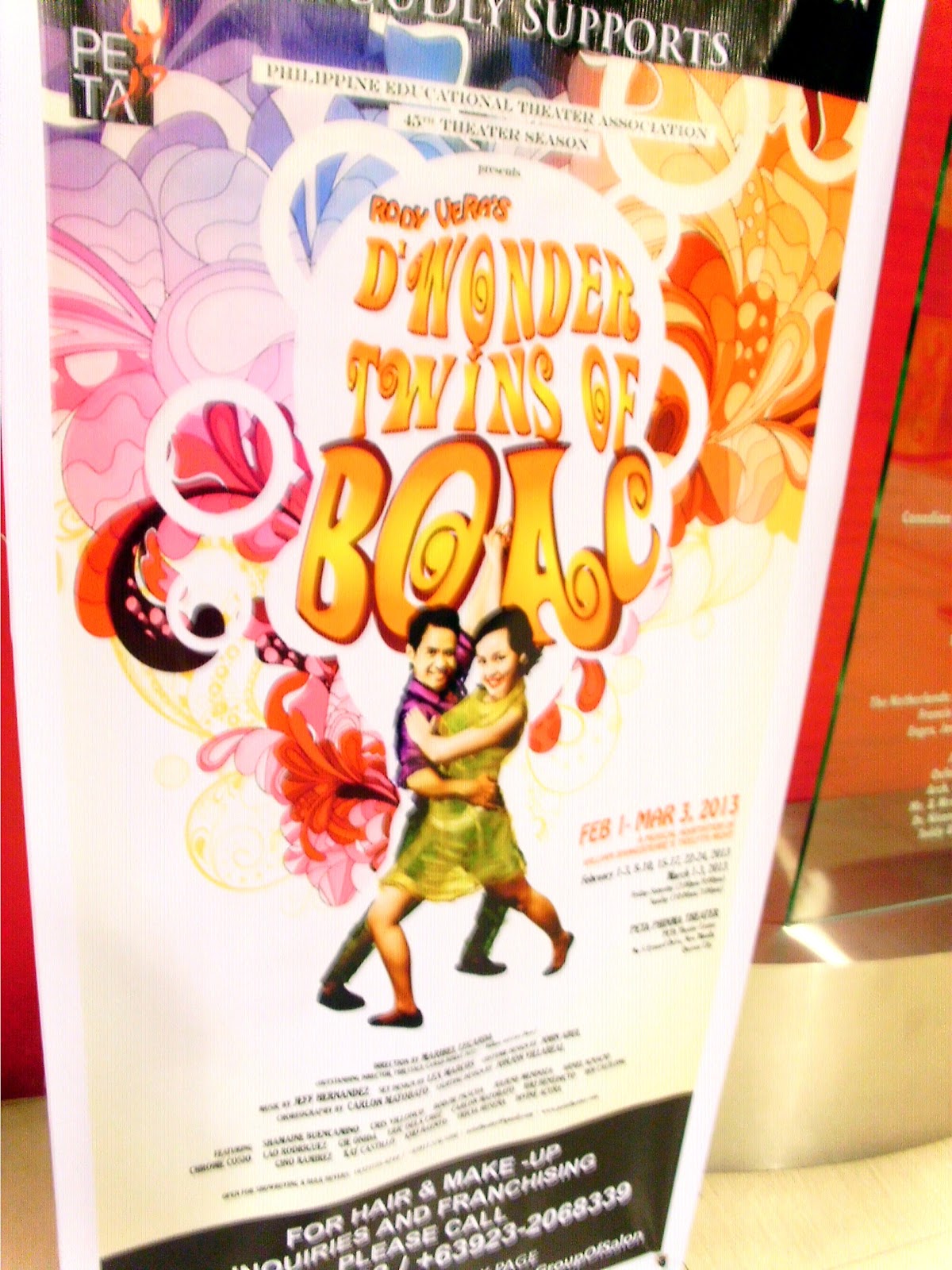
D' Wonder Twins of Boac on PETA


Following a desperate attempt on actual Filipino theater, my first PETA experience finally took place last Saturday night on the glittering streets of Eymard Drive in New Manila, in which D' Wonder Twins of Boac was showing on its first week. For some reason in which I was not supposed to be involved, I received an 80% discount on the ticket - the kind of luck that willfully drove me not to miss out on quite an opportunity.


The minute the doors were opened and I was ushered into what in theater vocabulary is a full house, I was instantly aroused by the small hall that enclosed an arena stage. I saw when the play began that the theater in the round provided the production a delightful synergy with the audience. That was when I found myself sitting next to Kenneth, the nine-year old kid of one of the caterers, and who claimed to have watched the play twice already. Yet, he persists.


Written by ingenious playwright Rody Vera, D' Wonder Twins of Boac is an adaptation of William Shakespeare's 12th Night, set in the 60's during the decline of Philippine Cinema's Golden Years, bedazzled with the unfailing loyalty of a musical that parodies the evolution of Philippine film industry.

Once the show put on its green lights, it couldn't be stopped. Not even the slightest kilo-joule of energy was lost. It deemed only the strong, right reactions, without dead air in attendance. Alas was the unraveling of passion, of secret desires and ulterior motives, the unhinging of personal interests, the offering of diverse business perspectives, unscrewing of egotism and self-rightousness, while underneath, all along, lurked the deterioration of an industry that was escorted stage left for its final exit.


One thing that I found interesting was the incorporation of the multi-media on the stage: a television screen hanging from the ceiling that subtlely dramatized the most striking acts such as the shipwreck of the twins Viola and Bastian, the slow rise of Cesar in the industry, even the bitter rivalry between Sampaguita Films and BLV Pictures. The idea fit just as well within the concept.

I think that the biggest factor that makes Boac quite easy to love is the new life that the actors breathed into their characters. We could still identify them in some of today's most powerful and influential Filipinos. It was a wholesome cast that knew their place onstage without outweighing the other. From beginning to end, not one of them fell out of persona, even off-scene. My personal favorite is the eccentric character of Malovolio, brilliantly played by Lao Rodriguez. Then there were Bastian and Antonio, and the bromance that hung over me in the morning that followed the experience.

Chrome Cosio as Bastian
Riki Benedicto as Antonio
In the end, the play turns out to be more tragic than the darkly comedic nature that, from the get-go, it had excellently expressed. What resulted from the singing and dancing, and the Elvis Presley wannabes of the late 60's was the scandalous explosion of the unflinching bare-bodied stars of the 70's Bomba era.

Director Maribel Legarda describes Boac as "not simply a period play". Call it a lesson on Filipino film or an classic that is only really meant to entertain the society that could easily identify with the business warfare of film. Beyond those, D' Wonder Twins of Boac is a recollection, a reminder, a "meaning" of the What Was Then that clicked so nicely with the Filipino film industry. It was a witness to the comings (and fadings) of stars, a classic battle royale of producers, vantage points, love and dreams detonating in disarray.